
TL;DR / Key Takeaways
- A new design can make a website look better, but it cannot answer an inquiry that goes unseen.
- A modern redesign can join the website with an AI receptionist that replies by email or text, follows up, and schedules.
- The AI handles agreed routine tasks. People keep control of sensitive messages, professional judgment, and client care.
- With a Draft & Approve approach, the AI prepares work and sends it for one sign-off when approval is needed.
- The goal is a connected front door for the business, not a fresh coat of paint with a separate chatbot.
A New Coat of Paint Won’t Fix a Missed Inquiry
A polished website can help a firm make a strong first impression. But the design alone cannot answer a message that arrives after hours, follow up when someone has not replied, or keep a booking from slipping through.
That gap matters to any small service business. A growing consultancy may do excellent work, yet still miss a chance to speak with someone who reached out. A small clinic may have clear, helpful pages, but still need a reliable way to respond to each new inquiry.
This changes what website redesign services should mean. A redesign is not only a new look. It can be the front door to a system that captures an inquiry and helps move it to the next step.
The Website Is the Start, Not the Finish
In the past, a redesign often ended when the new website went live. The site showed what a business did and how to get in touch. After that, a person had to notice each inquiry, reply, remember to follow up, and arrange a time to talk.
That manual work can become a weak point in the client process. The site may be open all day, but the team is not always free to answer a message as it arrives.
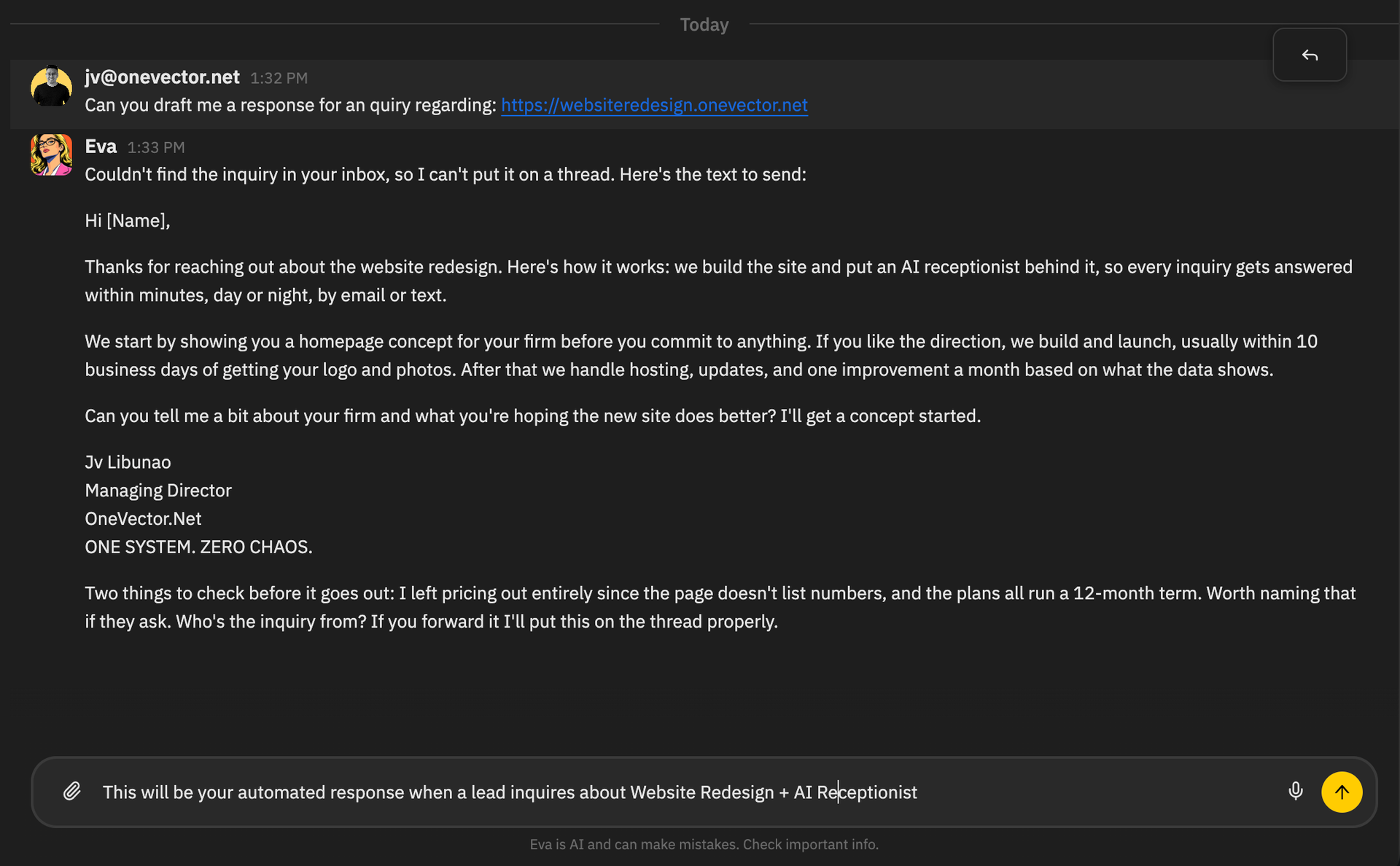
A more complete approach connects the website with an AI employee that can respond by email or text. The website captures the inquiry; the AI employee handles agreed response and follow-up work behind the scenes.
This is not live chat on the website. It is a way to help manage inquiries after someone reaches out, without relying on a staff member to notice and act on every message right away.
What the AI Receptionist Handles
An ai receptionist for small business can take on routine steps that would otherwise wait in a queue. The exact work depends on the instructions and approval rules agreed up front.
For example, the AI employee can:
- Reply to inquiries by email or text, including outside normal office hours.
- Follow up when a person has not yet answered.
- Help schedule a booking so the next step is less likely to get lost.
- Prepare routine messages in the firm’s name, following the firm’s guidance.
This is useful for firms where a new inquiry may come in while the team is serving a client, in a meeting, or away from the desk. The point is not to replace the people who do the professional work. It is to stop routine follow-up from depending on someone remembering to do it later.
An ai answering service in this setup does more than sit beside the website as a separate tool. The website and the AI backend work as one system: the site captures the inquiry, and the AI employee follows the agreed process by email or text.
The Design Still Has to Do Its Job
Automation cannot make a confusing website clear. The site still needs to explain what the business does and make the next step easy to find.
Good small business website design starts with the visitor’s point of view. Can they understand the service? Can they find a clear way to ask a question or request a booking? Does the site make the right information easy to follow?
That looks the same in every industry: present the service in plain language, make it obvious how a potential client can reach the team, and lay out the contact steps so they feel calm and easy to follow. The details vary, but the aim is the same: a site built to turn visitors into inquiries, not just to be online.
Design should be guided by an expert who understands how visitors use the site. Then, once someone reaches out, the connected AI employee can help carry the inquiry forward.
It Plugs Into the CRM You Already Run
An inquiry is only useful if it lands somewhere the team actually works. So the site sends every inquiry straight into the CRM the firm already uses, and the AI employee picks it up from there.
Whatever you run today, the rebuild is chosen to fit it rather than replace it. The site and the AI employee read and write to that same record, which means no second copy of the lead, no spreadsheet beside the inbox, and no one re-typing details from a notification into a system that should already know them.
If there is no CRM yet, or only a shared inbox and a spreadsheet doing the job, the same setup includes the lead triage layer it needs. Inquiries land in one place, get tagged and routed by rule, and can be worked on a phone without opening five tabs.
You are not asked to move off the tools your team knows. You get a site that starts the conversation and a CRM record that keeps it.
Draft & Approve: Let the AI Do the Routine Work
Giving an AI employee responsibility does not mean handing over every decision. A clear Draft & Approve operating system separates routine work from human-led work.
The AI does the agreed work and presents items for a single sign-off when approval is required. The team sets the rules at the start, including which messages may be sent on their own and which must be reviewed first.
Tasks that can stop being manual:
- Noticing and acknowledging each incoming inquiry.
- Sending routine replies by email or text.
- Following up until the person responds.
- Handling scheduling steps under the agreed rules.
Tasks that stay human-led:
- Setting the firm’s service standards and approval rules.
- Reviewing messages marked for approval.
- Using professional judgment and giving legal, clinical, or other expert advice.
- Building a relationship with the client and deciding what is right for their case.
This distinction matters. The AI employee should support the work around a professional service, not pretend to be the professional. People remain responsible for important decisions and client care.
To learn more about how an AI employee can support business operations, see this overview of AI employees.
Control Comes From Clear Rules
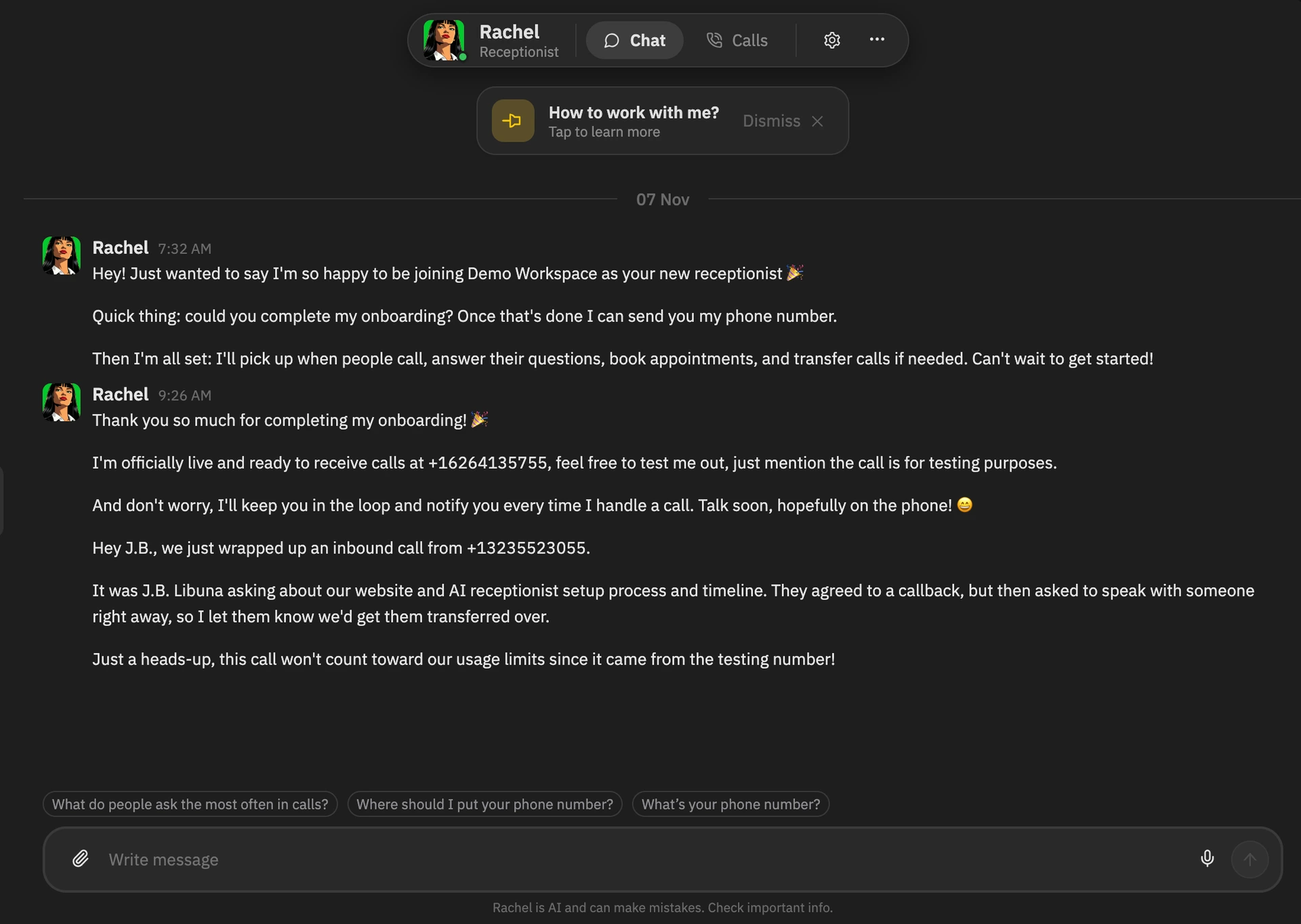
A useful system should fit the way the business wants to communicate. That means agreeing on approval rules before the AI employee starts handling inquiries.
Some routine replies may be sent under the firm’s own name without waiting for a person. Other messages can be held for review. The team can give instructions in plain English, without needing to write prompts each time a task comes up. The AI employee can work on its own within those agreed boundaries rather than waiting for someone to ask it to act.
The result is not a hands-off approach to professional responsibility. It is a clearer division of work: the AI handles routine steps, while people direct the standards and stay involved where judgment matters.
The Work Continues After Launch
A website redesign for small business should not have to become another project that the owner must manage alone. Done-for-you support can include setup, hosting, updates, and change requests, so the firm does not need to take on all of that work itself.
The site can also improve over time. Maintenance can include one data-driven improvement each month, based on how the website is being used. That gives the business a regular way to refine the experience rather than treating launch as the last step.
No Code. No Ticket. Just Plain English.
And the changes themselves don't need a ticket, a developer, or a line of code. You describe what you want in plain English, in a normal chat, and the update gets made. No filing a request and waiting a week for someone to interpret it, and no learning a page builder to move a button five pixels.
The site can also improve over time. Maintenance can include one data-driven improvement each month, based on how the website is being used. That gives the business a regular way to refine the experience rather than treating launch as the last step.
A Redesign That Starts a Better Process
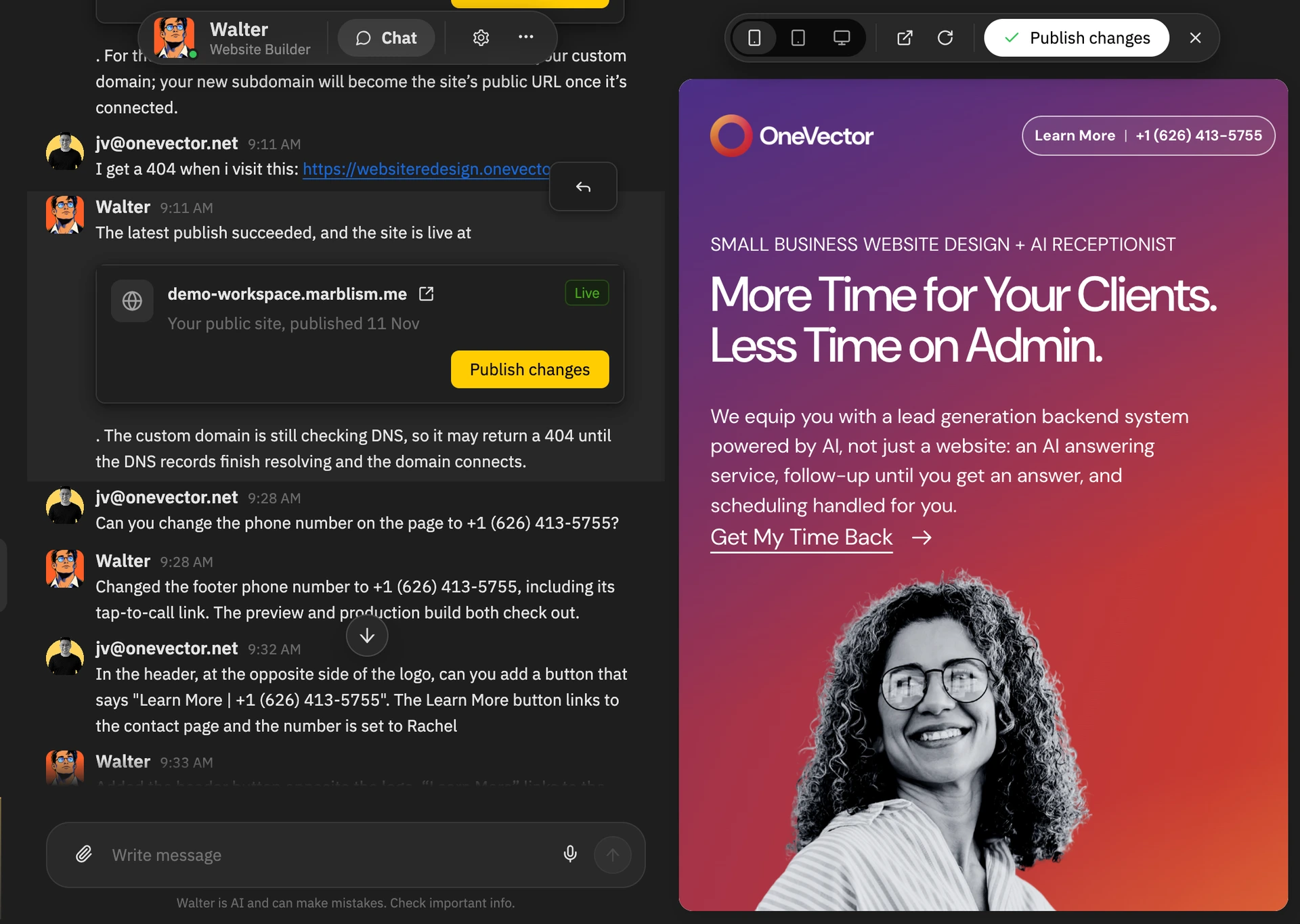
The real value of a redesign is not the new colors or layout by themselves. It is a clearer way for a potential client to make contact, and a dependable process for what happens next.
When the website and AI employee work together, an inquiry can receive a timely response, follow-up can continue until the person answers, and scheduling can be handled under rules the firm has approved. The team keeps control of important decisions while routine admin stops relying on memory and spare time.
The website used to be the finish line. Now it can be the front door to a connected system.